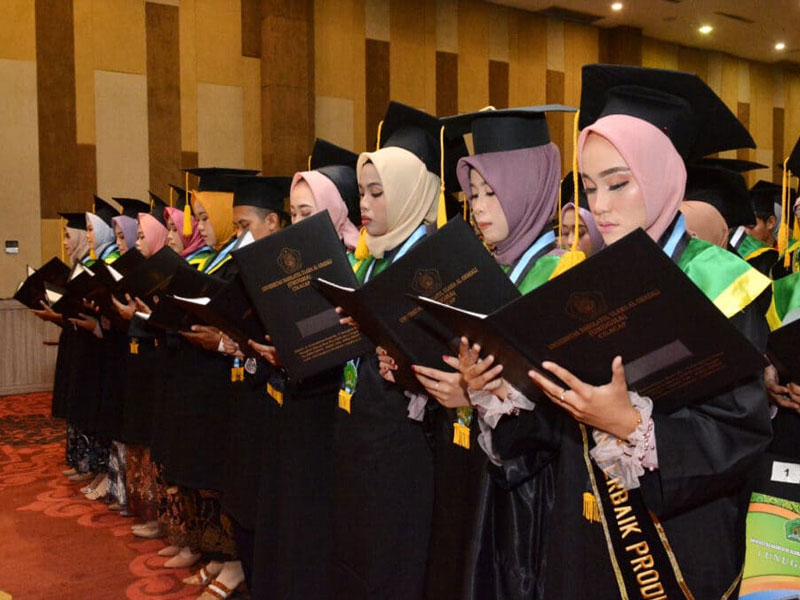
Prospectus and Curriculum Study Program / Majors / Department
(Required/Elective Courses, Job/Career Prospects, Profession, and Competencies of Graduates)
| 1. S1 Industrial Engineering Program |
Graduate Degree : S.T. or Ir.| Prospectus of S1 Industrial Engineering |
Industrial Engineering is a part of engineering science that incorporates multiple disciplines with an emphasis on the relation of science and engineering management science. As engineering science (engineering) approach to the design of Industrial Engineering, analysis, design, and improvement of the integral system consisting of human, machine / equipment, materials, energy, and information.
Industrial Engineering associated with the design, improvement and installation of a system that integrates human, material, tools, information, and energy to produce goods or services efficiently and effectively. Discipline is also seeking the achievement of optimal outcomes and management of the factors of production that supported the consideration of technical feasibility and socio-economically, with emphasis on the role of humans as the main factor of production (Human Factor).
Competencies of Graduates of S1 Industrial Engineering
S1 Industrial Engineering graduates equipped with the knowledge, professional ethics, ability and skills to identify, model and find the best solution of the problem in an integrated system with reference to the manufacturing system, as well as sharpening the production system and / or engineering quality and reliability; able to apply knowledge math, science and social science in solving problems in industrial engineering profession Able to work in a multidisciplinary group and responsible and understand the ethics of the profession; Mastery of information technology, management and entrepreneurial spirit that led to the formation of an innovative, professional attitude and a global perspective.
Industrial Engineering graduate has the competence, skills, and knowledge management industries emphasis on planning, organization, operation and control of production processes more effectively and efficiently; Manufacturing System that emphasizes planning and optimization of production systems by applying concepts and quantitative methods; Planning industrial systems are emphasized in the planning system at the macro industry an industry that addresses the relationship with the environment.
General / basic competency Bachelor of Industrial Engineering is to have quality and intellectual integrity; highly competitive both academically and morally; able to adjust to the changes; realize that science is always advancing and evolving; able to browse and obtain scientific information / engineering; know ways and can be constantly learning; handling each problem, was able to uncover the structure and core issues and set priorities stages of completion; know and can take advantage of the usefulness of mathematics and information technology can apply science and knowledge; proficient and skilled in the fields of industrial engineering ; can solve problems logically, utilize data / information available; able to use these concepts to explain things that are not / less clear; able to work independently and effort; able to actively participate in the working group; able to communicate with the experts in other areas of expertise and utilize their help; able to effectively utilize the resources available; able to start forming units stub entrepreneurs in the field of industry and commerce, able to follow new developments in the field of industrial engineering, conduct research, or to follow the course of study in levels further.
Industrial Engineering graduates have a variety of skills needed by the industry is the ability to formulate problems, identify solutions and evaluate the results, and also the ability to design, operation, improvement and optimization of the production system of goods and services; skills related to the design, improvement and installation of a system that integrates human, material, tools, information, and energy to produce goods or services efficiently and effectively; ability to seek achievement of optimal outcomes and management of the factors of production that supported the consideration of technical feasibility and socio-economically, with emphasis on the role of man as a factor primary production (Human Factor).
Profession and Career Graduates of S1 Industrial Engineering
Bachelor of Industrial Engineering can work and a career as an improvement of the production process or business process, an integrated system designers, managers and controllers integrated systems, project managers, production managers, production planning and control manager (PPIC), quality managers, logistics managers and supply chain, and operations managers; in manufacturing industry (factories), automotive, energy, consulting and contractor services, service industry (such as banking), government agencies or private (national and multinational) such as BUMN, etc.
Bachelor of Industrial Engineering to work and a career in Industrial Manufacturing (Inventory Management, Logistics, Operations Management, Production Management and Warehousing); Industrial Services (Client Management, Perumanahan Industrial and Commercial Bank, Financial Consultant, Systems Konsulatan Health and Human Resources); research and Development (Data Analysis, Security and Rescue Environment and Human factors Engineering); Business Management (Investment Banking Business Strategy, Management Analysis, Project Management and Business Development), Information Technology (Computer Integration, Database Design, Telecommunications and web Development); in research institutions, universities (state and private universities) as a lecturer and researcher.
Being Entreprenuer (entrepreneurs) to establish various types of management consulting services business.
S1 Industrial Engineering
Courses |
* = Concentration / Specificity / Options Courses
SKS = Semester Credit Units
| Courses | SKS | | Cost Accounting * | 3 | | Linear Algebra | 3 | | Analysis and Cost Estimation * | 3 | | Plant Feasibility Analysis * | 2 | | Multi Criteria Decision Analysis * | 3 | | Work Design Analysis I * | 2 | | Work Design Analysis II * | 2 | | Computer Applications Logistics * | 2 | | Indonesian | 2 | | English I | 2 | | English II | 2 | | English III * | 2 | | English IV * | 2 | | Benchmarking and Performance Measurement * | 3 | | CAD + Practicum * | 2 | | Computer Basics and Programming | 2 | | Basic Electrical Energy Conversion | 2 | | Engineering Economics | 2 | | Machine Elements * | 2 | | Enginering Logistics * | 3 | | Industrial Ergonomics * | 3 | | Philosophy of Science | 2 | | Basic Physics I | 3 | | Physics II | 3 | | Basic Sciences faulty world | 2 | | Social and Cultural Studies Association | 2 | | Chemical Industry * | 2 | | K3 (Occupational Safety and Health) * | 2 | | Calculus I | 3 | | Calculus II | 3 | | Job | 2 | | Entrepreneurship and Business Development | 3 | | Basic Chemistry | 3 | | Concept Technology | 2 | | Based Computer Maintenance * | 3 | | Innovation Management and Entrepreneurship * | 3 | | Quality Management | 3 | | Logistics Management * | 3 | | Materials Management and Investori * | 3 | | Marketing Management * | 3 | | Marketing Management * | 2 | | Maintenance Management * | 2 | | Warehouse Management * | 3 | | Industrial Company Management * | 3 | | Project Management * | 2 | | Supply Chain Management * | 3 | | Human Resource Management (HRM) * | 2 | | Technology Management * | 3 | | Material Handling and Ground Support * | 5 | | Engineering Mechanics | 3 | | Drawing Techniques | 2 | | Writing and Communication Scientific Method | 2 | | Research Methodology | 2 | | Industrial Organization and Management | 3 | | Automation Production System * | 3 | | Modeling System | 2 | | Religious Education | 2 | | Citizenship Education | 2 | | Pancasila Education | 2 | | Operational Research I | 3 |
| | | Courses | SKS | | Operational Research II * | 3 | | Introduction to Electronics | 2 | | Introduction to Economics | 2 | | Introduction to Industrial Engineering | 3 | | Quality Control | 2 | | Knowledge Materials | 3 | | Environmental Science | 2 | | Performance Measurement * | 3 | | Design and Product Development | 3 | | Design Distribution * | 3 | | Work Design and Ergonomics * | 3 | | Work System Design | 2 | | Manufacturing System Design | 3 | | Layout Design Factory | 3 | | Industrial Engineering Design I | 2 | | Design Industrial Engineering II | 2 | | Production Planning and Control I | 3 | | Production Planning and Control II | 3 | | Planning Organization * | 3 | | Industrial Pollution and Environmental Management * | 2 | | Practicum APK * | 1 | | Practicum CAD * | 1 | | Practicum CIM * | 1 | | Practical Computer Basics and Programming | 1 | | Practical Ergonomics | 1 | | Physics Practicum I | 1 | | Physics Practicum II | 1 | | Engineering Physics Lab | 1 | | Practicum Drawing Techniques | 1 | | Practicum Production Planning and Control | 1 | | Planning Practicum Manufacturing Systems | 1 | | Practicum Manufacturing Process | 1 | | Industrial Systems Simulation Lab * | 1 | | Practical Database Systems * | 1 | | Practicum Industry Statistics | 1 | | Practicum Factory Layout | 1 | | Manufacturing Process | 3 | | Production Process | 3 | | Industrial Psychology | 2 | | Quality Engineering * | 3 | | Final Seminar | 2 | | Industrial Systems Simulation | 3 | | Database Systems * | 3 | | Logistics Information System * | 2 | | Management Information Systems * | 3 | | Management Systems ISO * | 3 | | System Maintenance | 2 | | Prawatan System * | 3 | | Production System * | 3 | | Industry Statistics I | 3 | | Industry Statistics II | 3 | | Manufacturing Strategy * | 3 | | Building Structure * | 2 | | Ekspot-Import Procedure and Customs * | 2 | | Engineering and Logistics Management I * | 2 | | Engineering and Logistics Management II * | 2 | | Environmental Control Techniques * | 3 | | Technology Construction Materials * | 2 | | Total Quality Management (TQM) | 3 | | Final | 5 |
|
|
| 2. S1 Chemical Engineering Program |
Graduate Degree : S.T. or Ir.| Prospectus of S1 Chemical Engineering |
Competencies of Graduates of S1 Chemical Engineering
S1 Chemical Engineering graduates have a deep enough theory to apply their knowledge in performing tasks in the field of Chemical Engineering, especially for the implementation of the operation, management and design.
S1 Chemical Engineering graduates equipped with knowledge, ethics, skills and ability to develop themselves and be creative in the task of developing, designing and coordinating the work of processing the raw material into a product on a large scale through chemical processes and / or physics by considering the relevant technical aspects, economically sound environmental responsibility and power to be able to develop the natural wealth of Indonesia, for the welfare of the nation in particular and humanity in general.
General/basic competency Bachelor of Chemical Engineering is to have quality and intellectual integrity; highly competitive both academically and morally; able to adjust to the changes; realize that science is always advancing and evolving; able to browse and obtain scientific information / engineering; know ways and can be constantly learning; handling each problem, was able to uncover the structure and core issues and set priorities stages of completion; know and can take advantage of the usefulness of mathematics and information technology can apply science and knowledge; proficient and skilled in the field of chemical engineering ; can solve problems logically, utilize data / information available; able to use these concepts to explain things that are not / less clear; able to work independently and effort; able to actively participate in the working group; able to communicate with the experts in other areas of expertise and utilize their help; able to effectively utilize the resources available.
Bachelor of Chemical Engineering subjects mastered elementary basic sciences, basic sciences and engineering sciences and chemical process engineering proficient and skilled in the use of (practice), so that it can adapt quickly when working in the chemical process industry and / or agencies (or sectors) are related, as the operating engineers, process engineers, design engineers, or sales engineer; able to start forming units pioneering entrepreneur in the field of industry and trade of chemical, able to follow new developments in the field of chemical engineering, conduct research , or follow the course of study at the next level; able to perform calculations to solve the problem of chemical engineering as an operating engineer and planner mill.
Bachelor of Chemical Engineering master the basic problems of piping design and equipment details so that the chemical industry can design and evaluate the system piping and equipment chemical industry; has the ability to understand and analyze the design of modern control systems for chemical processes; has the ability to analyze and master the techniques of biochemical engineering bioreactors in order to solve problems and perform design related to biotechnology; has the ability to analyze and carry out design of chemical processes.
Profession and Career Graduates of S1 Chemical Engineering
Bachelor of Chemical Engineering can work and a career in the chemical process industry, petrochemical industry, paper industry, food industry and foodstuffs, cement plants, fertilizer industries, mining processing industries, oil and gas industries, oil refinery, the company EPCC (Engineering, Procurement , Construction, and Commissioning), FMCG (Fast Moving Consumer Goods), field oleochemical companies, industrial renewable energy (bioethanol, biodiesel, biomass gasification), the catalyst industry, agribusiness, various specialty chemical industries, government agencies (Bappeda, Bappenas, the Ministry of Energy and Mineral Resources, Ministry, Ministry of Health, etc.), research institutes, high peruguruan (PTN, PTS), etc.
Bachelor of Chemical Engineering can also be entreprenuer (entrepreneurs) to establish a reliable consulting engineering industry, chemical process consulting, etc.
S1 Chemical Engineering
Courses |
* = Concentration / Specificity / Options Courses
SKS = Semester Credit Units
| Courses | SKS | | Chemical Industry Equipment | 3 | | Information Technology Applications in Chemical Engineering | 2 | | Chemical Engineering Principles I | 2 | | Principles of Chemical Engineering II | 2 | | Chemical Engineering Principle III | 3 | | Construction Material Chemical Engineering | 2 | | English I | 2 | | English II * | 2 | | English III * | 2 | | English IV * | 2 | | Engineering Economics | 2 | | Machines Elements | 2 | | Basic Physics I | 2 | | Physics II | 2 | | Physics III | 2 | | Social Science Association | 2 | | Calculus I | 2 | | Calculus II | 2 | | Calculus III | 2 | | Job | 2 | | Entrepreneurship | 2 | | Chemical Analysis | 3 | | Basic Chemistry | 3 | | Chemical Physics | 3 | | Organic Chemistry | 3 | | Chemistry Solids | 3 | | Computational Process | 2 | | Concept Technology * | 2 | | Project Management * | 2 | | Chemical Engineering Mathematics II | 2 | | Chemical Engineering Mathematics II | 3 | | Drawing Techniques | 2 | | Gas / Petrochemical | 2 | | Microbiology Chemical Engineering | 2 |
| | | Courses | SKS | | Operations of Chemical Engineering I | 3 | | Operations of Chemical Engineering II | 3 | | Operations of Chemical Engineering III | 3 | | Pendadaran | 1 | | Citizenship Education | 2 | | Pancasila Education | 2 | | Research Laboratory | 3 | | Quality Control and TQM | 2 | | Process Control | 3 | | At Activator | 2 | | Process Equipment Design | 3 | | Design Factory (Final) | 3 | | Chemical Plant Design I | 2 | | Chemical Plant Design II | 2 | | Chemical Engineering Practicum I | 2 | | Chemical Engineering Practicum II | 3 | | Chemical Engineering Practicum III | 2 | | Chemical Engineering Practicum IV | 2 | | Computer Program | 2 | | Chemical Process Industries I | 3 | | Chemical Process Industries II | 2 | | Transfer Process | 3 | | Building Structure * | 2 | | Chemical Reaction Engineering I | 2 | | Chemical Reaction Engineering II | 2 | | Chemical Reaction Engineering III | 2 | | Reactor Engineering * | 3 | | Power Engineering | 2 | | and Industrial Waste Water Technology | 2 | | Food Ingredients Technology | 2 | | Polymer Technology | 2 | | Chemical Engineering Thermodynamics | 2 | | Chemical Engineering Thermodynamics II | 3 | | Utilities | 3 |
|
|
| 3. S1 Mechanical Engineering Program |
Graduate Degree : S.T. or Ir.| Prospectus of S1 Mechanical Engineering |
Competencies of Graduates of S1 Mechanical Engineering
S1 Mechanical Engineering graduates equipped with knowledge, ethics, ability and skills to design a machine tool, convert the energy from the source into useful energy, producing objects or machine parts in terms of techniques, processes and management.
S1 Mechanical Engineering graduate has the competence, skills, and knowledge of basic machine, solid mechanics, hydraulic and pneumatic, automotive, metallurgy, welding technology, cast technology, material failure, power generation systems, mechanics and fluid machinery, fuel and combustion motors in, heat and mass transfer, refrigeration and air conditioning engineering, machine tools and perautan, mechanical technology, industrial metrology, basic CNC, machining industry, computer aided engineering, mechanics and instrumentation, and industrial automation systems, maintenance engineering, energy conversion, energy management, etc.
General/basic competency Bachelor of Mechanical Engineering is to have quality and intellectual integrity; highly competitive both academically and morally; able to adjust to the changes; realize that science is always advancing and evolving; able to browse and obtain scientific information / engineering; know how and can continually learn; in dealing with each problem, and is able to reveal the structure of the core problems and set priorities stages of completion; know and can take advantage of the usefulness of mathematics and information technology can apply science and knowledge, competent and skilled in the field of mechanical engineering; able to solve problems logically, utilize data / information available; able to use these concepts to explain things that are not / less clear; able to work independently and effort; able to actively participate in the working group; able to communicate with experts in other areas of expertise and utilize their help; able to effectively utilize the resources available; able to start forming units pioneering entrepreneur in the field of mechanical engineering, was able to follow new developments in the field of mechanical engineering, conduct research, or to follow the course of study in levels further.
Bachelor of Mechanical Engineering master the basics of the nature of science in general machining techniques and in particular, having the ability to think creatively and critically so that they can learn independently continually to always be able to follow the development of these areas of expertise, so it has great adaptability to the demands of environment; has extensive knowledge and insight that can be self-employed and create jobs; dominate the field of mechanical engineering has an important role in the process of industrialization such as movers, construction equipment and machine tools factory; also capable of handling the research, design and development of engineering fields such as automotive , konvervasi manufacturing technology and energy fields.
Profession and Career Graduates of S1 Mechanical Engineering
Bachelor of Mechanical Engineering to work and a career in government or private agencies (national and multinational) such as state-owned enterprises (BUMN), manufacturing companies, automotive, energy, consultancy and contracting services, mining and petroleum, research institutes, universities (state and private universities), etc. : as a leader or manager, or maintenance expert engineering, energy conversion, energy management, designers and developers such as automotive engineering, manufacturing technology, etc.
Being technopreneurs with established consultants and contractors with regard to fuel consumption, performance, impact and energy management, engine performance analysis, operation & maintenance training, design and control of manufacturing processes and systems, training of manufacturing technology, CAD / CAM, CNC, quality control and metrology industries, etc.
S1 Mechanical Engineering
Courses |
* = Concentration / Specificity / Options Courses
SKS = Semester Credit Units
| Courses | SKS | | Heavy Equipment * | 3 | | Material Fatigue Analysis * | 3 | | Numerical Analysis and Computer Applications | 2 | | Structural Analysis * | 3 | | Indonesian | 2 | | English 1 | 2 | | English 2 * | 2 | | English 3 * | 2 | | English 4 * | 2 | | Programming Languages * | 2 | | CAD \ CAM | 3 | | CAE * | 3 | | Fluid Dynamics * | 3 | | Vehicle Dynamics * | 3 | | Engineering Economics | 3 | | Machine Elements I | 3 | | Machine Elements II | 3 | | Machine Elements III * | 3 | | Basic Physics I | 3 | | Physics II | 3 | | FMS * | 3 | | Advanced Mechanical Vibration * | 3 | | Mechanical Vibration | 3 | | Basic Natural Science | 2 | | Cultural Social Science Association | 2 | | Calculus I | 3 | | Calculus II | 3 | | Job | 2 | | Boiler & Turbine Steam * | 3 | | Entrepreneurship | 2 | | Chemical Engineering | 3 | | Kinematics and Dynamics | 3 | | Kompt. Fluid Dynamics & Perp. Hot * | 3 | | Concept Design * | 3 | | Concept Technology * | 2 | | Corrosion * | 3 | | Energy Management * | 3 | | Production Management * | 3 | | Industrial Management | 3 | | Engineering Mathematics * | 3 | | Materials Engineering | 3 | | Materials Engineering II * | 3 | | Fluid Mechanics * | 3 | | Strength Material Mechanics | 3 | | Mechatronics | 2 | | Computer-Based Engineering Drawing | 2 | | Drawing Techniques | 2 | | Machines - Fluid machines | 3 | | Energy Conversion Machines | 3 | | Material Moving Machine * | 3 | | Machine Tools | 3 | | Physical Metallurgy | 3 |
| | | Courses | SKS | | Finite Element Method * | 3 | | Research Methodology | 1 | | Industrial Metrology * | 3 | | Motor Fuel * | 3 | | Material Selection and Process | 2 | | Machine Programming NC / CNC | 3 | | Religious Education | 2 | | Citizenship Education | 2 | | Introduction to Mechanical Engineering | 2 | | Measurement Techniques | 2 | | Equipment Engineering * | 2 | | Experimental Design * | 3 | | Piping System Design * | 3 | | Tools Help * | 3 | | Heat Transfer | 3 | | Differential Equations * | 4 | | Lift and Transport Aircraft * | 3 | | Plastics and Polymers * | 3 | | PPC / PPIC * | 3 | | Industry Practices * | 3 | | Basic Practicum | | phenomenon Machines | 1 | | Practical Physics | 1 | | Practicum Achievement Machine | 1 | | Practicum Production Process | 1 | | Production Process I | 3 | | Production Process II | 3 | | Team Design Project I * | 3 | | Team Design Project II * | 3 | | Refrigrasi and Air Conditioning * | 3 | | Engineering Design * | 3 | | Robotics * | 3 | | Final Seminar | 1 | | Hydraulic and Pneumatic Systems | 2 | | Refrigrasi Systems and Applications * | 3 | | Solid Waste Management I * | 3 | | Solid Waste Management II * | 3 | | Structural Statics | 3 | | Statistics and Probability | 2 | | Voltage Exsperimental * | 3 | | Combustion Engineering * | 3 | | Engineering Establishment * | 3 | | Engineering Settings | 3 | | Casting Techniques * | 3 | | Welding Engineering * | 3 | | Engineering Heat Exchanger * | 3 | | Power Engineering | 2 | | Machining Technology * | 3 | | Basic Thermodynamics | 3 | | Applied Thermodynamics * | 3 | | Final | 5 |
|
|
| 4. S1 Information Systems Program |
Graduate Degree : S.S.I. or S.Kom. or S.T. or S.Si. or Ir.| Prospectus of S1 Information System |
Information System together with Informatics Engineering, is the fastest growing field so there was a shift in the world of business, industry, and expansion raises employment opportunities in various sectors of the broad field of Information System include developing information systems, methods and tools (programming languages and database), management information systems and information systems engineering.
Study program of Information System implement, assess, and develop engineering science underlying information system. Toward the scholarly study of this course include discipline, processes, techniques and tools that are needed in the engineering information system which includes the planning, development, implementation and maintenance.
Information System are needed in many areas of the world of work, especially in the face of economic liberalization in the era of globalization can not be separated from the world infomrasi; need to be prepared so that the quality of human resources and is able to compete in every aspect, especially the field of information systems.
Competencies of Graduates of S1 Information System
S1 Information System graduates equipped with knowledge, ethics, abilities and skills to create a program in accordance with the business processes, designing and building a database system, conduct Web-based programming, based on the latest and most advanced programming languages, software engineering, multimedia systems, design and build object-based systems; identify the needs of the network in an organization, designing and building a corporate information system (enterprise information system), manage project information and communication technology, auditing information systems, e-business, a trouble shooter computer, etc.
S1 Information System graduates have the competence and expertise as System Analysis, System Designer, Systems Development Consultant, Database Administrator, Network Administrator, and so on.
General/basic competence Bachelor of Information System is to have quality and intellectual integrity; able to adjust to the changes; realize that science is always advancing and evolving; able to browse and obtain scientific information / engineering; know how and can continually learn; in deal with each problem, was able to uncover the structure and core issues and set priorities stages of completion; know and can take advantage of the usefulness of mathematics and information technology can apply science and knowledge; proficient and skilled in the field of information systems; able to solve problems logically, utilize data / information available; able to use these concepts to explain things that are not / less clear; able to work independently and effort; able to actively participate in the working group; able to communicate with experts in other areas of expertise and utilize their help it is able to effectively utilize the resources available; able to start forming units pioneering entrepreneur in information system, able to follow new developments in the field of information systems, conduct research, or to follow the course of study at the next level.
S1 Information System graduates have the competence and expertise to provide integrated solutions in the field of E-Business, Corporate Information Systems, Information Management, Computerized Accounting; also capable of being a reliable information technology-based entrepreneurs; become qualified people who have a high intellectual, creative, innovative and sensitive to environmental phenomena that occur in the community; may provide information system solutions to the problems that exist in society, and so on.
Profession and Career Graduates of S1 Information System
Bachelor of Information System can work and a career in the field of corporate information systems, databases, networking, software, multimedia, e-business in various government agencies or private (national and multinational) such as state-owned enterprises (BUMN), IT / IS consultant, telecommunications, manufacturing, banking , insurance and other financial institutions, research institutions, corporate services (transport, tourism, hotel, etc.), networking companies, internet service providers, universities, etc.
Career / work as Systems Analysis, System Designer, Systems Development Consultant, Database Administrator, Network Administrator, Department of Information Systems Manager, Information Systems Development Project Manager, Expert / Instructor / Lecturer, etc.
Being techno with established consulting services in the field of information and communication technology systems, business and system analysis, programmer, etc.
S1 Information System
Courses |
* = Concentration / Specificity / Options Courses
SKS = Semester Credit Units
| Courses | SKS | | Basic Accounting | 2 | | Programming Algorithms & Data Structures | 4 | | Linear Algebra * | 3 | | Analysis & Design of Information Systems | 3 | | Object Oriented Design Analysis | 3 | | The E-Bussiness Analysis * | 3 | | Business Process Analysis * | 3 | | Computer Applications | 3 | | Information Systems Audit * | 3 | | Indonesian | 2 | | English 1 | 2 | | English 2 | 2 | | English 3 * | 2 | | English 4 * | 2 | | Programming Languages * | 3 | | Database | 3 | | Basic Programming | 3 | | Data Warehouse and Data Minning * | 3 | | Special Database * | 3 | | E-Business * | 3 | | E-Commerce * | 3 | | Enterprise Information System * | 3 | | Enterprise Resource Planning * | 3 | | Professional Ethics | 2 | | Human Computer Interaction * | 3 | | IT-Advertasing + Practice * | 3 | | IT-Governance * | 3 | | Computer Network | 3 | | Information Systems Security * | 3 | | Job | 2 | | Citizenship | 2 | | Entrepreneurship 1 | 2 | | Entrepreneurship 2 * | 2 | | Entrepreneurship 3 * | 2 | | Computers & Society | 2 | | Computer Graphics | 2 | | Computer Society * | 3 | | Inter Personal Communication * | 2 | | Portal & Content Management Concept * | 3 | | Concept Information Systems | 3 | | Concept Technology * | 2 | | Mathematical Logic * | 3 | | Project Management Information System | 3 | | Management Science * | 3 | | Database Transaction Management * | 3 | | General Management * | 3 | | Basic Math | 3 |
| | | Courses | SKS | | Research Methodology Information Technology | 2 | | Mobile Programming * | 3 | | Multimedia & Animation * | 3 | | Database Application Programming * | 3 | | Object Oriented Programming * | 3 | | Programming Visual * | 3 | | Web Programming 1 * | 3 | | Web Programming 2 * | 3 | | Religious Education | 2 | | Citizenship Education | 2 | | Introduction to Accounting * | 3 | | Introduction to Management and Business * | 3 | | Introduction to Information Technology | 3 | | Information Systems Development * | 3 | | Business Knowledge * | 2 | | Database Design * | 3 | | Practical Algorithms & Programming | 1 | | Practical Object Oriented Design Analysis | 1 | | Practical Programming Language | 1 | | Practical Database | 1 | | Practicum Basic Programming | 1 | | Practical E-Commerce * | 1 | | Practical Computer Networks * | 1 | | Practical Project Management * | 1 | | Practical Project Management Information System | 1 | | Practical Programming Visual * | 1 | | Practical Web Programming * | 1 | | Practical Database Design * | 1 | | Practicum Operating System | 1 | | Practical Data Structure * | 1 | | Information Systems Development Project | 3 | | Software Engineering * | 3 | | Information Systems Engineering * | 3 | | Remote Sensing * | 3 | | Final Seminar | 1 | | Accounting System * | 3 | | Accounting Information Systems * | 3 | | Geographic Information Systems * | 3 | | Management Information Systems * | 3 | | Operating System | 3 | | Decision System * | 3 | | Statistics & Probability | 3 | | E-Business Strategies * | 2 | | Data Structure * | 3 | | Testing & Implementation of Information Systems | 3 | | Final | 5 |
|
|
| 5. S1 Technical Information Program |
Graduate Degree : S.T. or S.Kom. or S.Si. or Ir.| Prospectus of S1 Informatics Engineering |
Informatics Engineering (information technology, computers, internet and telecommunications) is the fastest growing field and cause expansion of employment opportunities in a wide range of sectors, particularly the manufacturing sector, and computer services firms, software houses, IT consulting, as well as the various fields of technology of information.
To deal with the liberalization of information in the era of globalization, much needed quality human resources and is able to compete in every aspect, especially in the information technology field of informatics engineering.
Informatics Engineering are needed in many areas of the world of work, the development of various disciplines of information science, good science and process technology specifically symbolic facts (data) into information by making the most of computer technology. Informatics Engineering basing logic and systematic approach to obtain the solution in solving various problems.
Competencies of Graduates of S1 Informatics Engineering
S1 Informatics Engineering graduates equipped with knowledge, ethics, skills and abilities to design, apply and develop the information and communication technology systems in the field of Software Engineering, Information Systems, Engineering, Networking, Multimedia Systems, Management Information Systems (MIS), System Analysis, System Designer , Consultant Systems Development, Database administrator, Network administrator, Computer Networking, Software Engineer, Artificial Intellegence, Games & Embedded System Programs, Database System, etc.
General/basic competency Bachelor of Informatics Engineering is to have quality and intellectual integrity; able to adjust to the changes; realize that science is always advancing and evolving; able to browse and obtain scientific information / engineering; know how and can continually learn; in dealing with each problem, was able to uncover the structure and core issues and set priorities stages of completion; know and can take advantage of the usefulness of mathematics and information technology can apply science and knowledge; proficient and skilled in the field of informatics engineering; able to solve problems logically, utilize data / information available; able to use these concepts to explain things that are not / less clear; able to work independently and effort; able to actively participate in the working group; able to communicate with experts in other areas of expertise and utilize aid them; able to effectively utilize the resources available; able to start forming units pioneering entrepreneur in the field of informatics engineering, able to follow new developments in the field of informatics engineering, conduct research, or to follow the course of study at the next level.
S1 Informatics Engineering graduates have the competence and expertise of software engineering, computer networks, databases, artificial intelligence and game programming and embedded system which is able to adapt to the development of Information Technology in order to provide a model of a computer-based system solutions; also capable of being a reliable information technology-based entrepreneurs, etc.
Profession and Career Graduates of S1 Informatics Engineering
Bachelor of Informatics Engineering to work and a career in government or private agencies (national and multinational) as System Analysis, System Designer, Systems Development Consultant, Database Administrator, Network Administrator, Specialist in IT Security, Mobile Application Programmer and Design, Information and Communication Technology (ICT) Consultant, web Developer, Artificial Intelligence Applicator, ICT Project Manager, ICT Researcher, etc.
Career / work in the field of Corporate Information Systems, Software Engineering, Network Engineering, Multimedia Systems, Database, Networking, Software, Multimedia, E-Business Consultant at IT / IS, Corporate Telecommunications, Industrial Manufacturing, Bank, Insurance and other financial institutions, Networking companies, Internet Service Providers, research institutions, corporate services (transport, tourism, etc.), Government Agencies, Universities, etc.
Career / profession as Department Manager of Information Systems, Information Systems Development Project Manager, Artificial Intelligent, Computer Networking, System Support, System Design, Database Administrator, Web Developer & Designer, Games & Embedded System Program, Programmer Analyst, Software Engineer, Lecturer / lecturers, etc.
Being Technoprenuer by establishing consulting services Information Communication Technology Systems, Business & System Analysis, Software Engineer, Game Developer, progammer, etc.
S1 Informatics Engineering
Courses |
* = Concentration / Specificity / Options Courses
SKS = Semester Credit Units
| Courses | SKS | | Algorithms and Programming | 3 | | Linear Algebra and Matrix | 3 | | Object-Oriented Analysis and Design | 3 | | Analysis and Design Software * | 4 | | Analysis and Planning System * | 3 | | Computer Applications | 3 | | Multimedia Applications * | 2 | | Computer Architecture and Organization | 3 | | Indonesian and Scientific Tata Write | 2 | | English I | 2 | | English II | 2 | | English III * | 2 | | English IV * | 2 | | Assembly Language * | 2 | | Database | 3 | | Client-Side Scripting * | 3 | | Computer Basics | 2 | | Basic Router * | 3 | | Data Mining * | 2 | | Data Ware House * | 2 | | Professional Ethics | 2 | | Physics | 3 | | Modern Physics * | 3 | | Computer Graphics * | 3 | | Business Law * | 2 | | Artificial Intelligence * | 2 | | Human-Computer Interaction | 3 | | Computer Network and Data Security I | 4 | | Computer Network and Data Security II * | 4 | | Calculus I | 2 | | Calculus II | 2 | | Network Security * | 3 | | Computer Security * | 3 | | Between Personal Skills * | 2 | | Artificial Intelligence | 4 | | Job | 2 | | Citizenship | 2 | | Entrepreneurship and Business Development | 3 | | Entrepreneurship and Business Development Pricing * | 2 | | Basic Chemistry * | 2 | | Computers and Society | 3 | | Computer Graphics * | 3 | | Data Communications * | 3 | | Programming Language Concepts * | 3 | | Concept Technology * | 2 | | Cryptography * | 3 | | Logic Information | 3 | | Network Management * | 2 | | Project Management Software | 3 | | Information Technology Project Management * | 3 | | Database Transaction Management * | 3 | | District Mathematics | 3 | | Numerical Methods * | 3 | | Research Methodology Information Technology | 2 | | microprogramming * | 3 | | Model and Simulation (+ Practice) * | 3 | | Multimedia * | 3 | | 3D and Multimedia Animation * | 2 | | Oracle * | 4 | | Modeling 2D / 3D * | 3 | | Modeling and Simulation * | 3 |
| | | Courses | SKS | | Assembler Programming * | 3 | | Object Oriented Programming | 3 | | Programming C++ * | 3 | | Network Programming * | 3 | | Programming P/L SQL * | 4 | | Programming Visual Client Server * | 3 | | Programming Visual multitier * | 3 | | Enterprise Web Programming * | 3 | | Religious Education | 2 | | Pancasila and Citizenship Education | 2 | | Introduction to Information Technology | 3 | | Image Processing * | 3 | | Database Design * | 3 | | OOP Design + Practicum | 3 | | Practical Algorithms and Programming | 1 | | Practical Object-Oriented Analysis | 1 | | Assembly Language Practicum * | 1 | | Practical Database | 1 | | Basic Practicum Computer | 1 | | Practical Data Warehouse and Data Mining * | 1 | | Practical Physics | 1 | | Practicum Hardware and Software | 4 | | Practicum Network | 1 | | Practical Artificial Intelligence * | 1 | | Practical Programming Language Concepts | 1 | | Practical Linux | 4 | | Practicum Multimedia | 1 | | Practical Programming Mobile Java * | 4 | | Practical Programming Object Orientation | 1 | | Practical Programming Web | 1 | | Practical Database Design | 1 | | Practicum Php MySQL | 4 | | Desktop Options Program Practicum I * | 4 | | Desktop Options Program Practicum II * | 4 | | Practicum Multimedia Systems * | 1 | | Practicum Operating System | 1 | | Practical Data Structures | 1 | | Practicum Vb.Net * | 4 | | series Digital * | 3 | | Software Engineering + Practice I * | 4 | | Software Engineering + Practice II * | 4 | | Research Information Technology | 3 | | Final Seminar | 1 | | Server-Side Scripting * | 3 | | Database Systems | 3 | | File Systems * | 3 | | Management Information Systems | 3 | | Computer Security Systems * | 3 | | Multimedia Systems * | 3 | | Operating System | 3 | | Software Systems * | 3 | | SQL Server * | 4 | | Statistics and Probability | 3 | | Organizational Structure Data | 3 | | Compilation Techniques * | 3 | | Simulation Techniques * | 2 | | Technology and Database Systems * | 3 | | Language and Automata Theory * | 3 | | Theory of Computation * | 2 | | Final | 6 |
|
|
| 6. S1 Counseling guidance Program |
Graduate Degree : S,Pd | Prospectus S1 Guidance and Counseling Islam |
Graduates Competency S1 Guidance and Counseling Islam
A graduate of the Islamic Counseling and Counseling Study Program After graduating from the Department of Islamic Counseling and Counseling, graduates in both concentrations, both for the
Community Counselors and
Education Counselors theoretically Is expected to understand and master the various concepts and approaches of Islamic Guidance and Counseling, and has the intellectual capacity to understand the psychological problems of individuals, groups (communities) and the wider community.At the practical level, the competence for the concentration of Community Counselors in the BKI department is expected to identify and resolve psychological problems in the family and community through the provision of Islamic guidance and counseling, motivation and training, mediation and advocacy.
Basic competence / basic Bachelor Guidance and Counseling Islam is As for the concentration of Education Counselors (School), in the realm of practical, graduates are also expected to identify & solve the psychological problems of learners, able to plan and implement and provide services counseling and counseling Islam as well as mengevaluasinya In the personal, social, learning, career, and religious fields. So it can show academic and or professional performance in the field of guidance and counseling of Islam in schools, universities and the wider community.
Main Competencies:
- Mastering the normative and theoretical dimension of da'wah (philosophical foundation, scholarship, and methodology of da'wah).
- Mastering the technical dimension-practical da'wah (da'wah management).
- Mastering psychology.
- Mastering the guidance of Islamic counseling and psychotherapy.
Supporting Competencies:
- Master of Science Communication and Public Speaking.
- Mastering knowledge in Entrepreunership.
- Have knowledge about contemporary da'wah themes.
- Mastering communication and information technology.
- Understand the local culture.
Profession and Career Graduates S1 Islamic Counseling and Counseling
Bachelor of Islamic Counseling and Counseling, critical thinking and analytical thinking and creative and innovative ability developed by the Department of BKI Faculty of Da'wah and Communication UIN Sunan Kalijaga Yogyakarta has proven able to produce graduates who have expertise and professionalism in the field of Islamic Guidance and Counseling. Therefore, as a graduate, you will have a great opportunity to develop careers in various public sectors both private and government, even you can become an entrepreneur as Trainer and Motivator, and Consultant. The areas of work that you can enter, among others:
1. For the concentration of Community Counselor, the opportunity of profession is very wide, ranging from religious counselor, pembmbing / advocate (advocate), Islamic therapist, Lecturer and Researcher, to consultant, motivator and so forth. The institutions or institutions that can be entered, among others: BP4, NGOs (Non Governmental Organizations), Social Services (Panti-Panti), mental health institutions such as LAPAS, Hospitals, Rehabilitation Centers.
2. For Counselors Concentration Education (School), which is commonly referred to as BK teacher, since 2010 Kemenag has received graduates of BKI to fill the formation of BK teachers at the level of Madrashah Ibtidaiya, Tsanawiyah, and Aliyah). But not a few who also become teachers BK in schools in general under Kemendikbud.
S1 Islamic guidance and counseling
Courses |
* = Concentration / Specificity / Options Courses
SKS = Semester Credit Units
| Courses | SKS | | IBD | 2 | | English I | 2 | | Introduction to Counseling Guidance | 2 | | Tauhid Science | 2 | | Introduction to Psychology | 2 | | Fiqh I | 2 | | Morals Science | 2 | | The History of Da'wah | 2 | | Citizenship Education | 2 | | English II | 2 | | IAD | 2 | | Ulumul Qur'an | 2 | | Ulumul Hadith | 2 | | English | 2 | | Introduction to Philosophy | 2 | | Mystic Suffering | 2 | | Fiqh II | 3 | | Dakwah Science | 3 | | English III | 2 | | Mantik Science | 2 | | Fiqh III | 3 | | Da'wah Hadith | 2 | | Tafsir Da'wah | 2 | | Islamic Philosophy | 2 | | Religious Psychology | 2 | | Dakwah Psychology | 2 | | Personality Psychology | 2 | | Theory and Counseling Guidance Approach | 2 | | Quantitative Research Methodology | 2 | | Communication Science | 2 | | Ushul Fiqh | 3 | | The Non Test Test Theory | 2 | | Counseling Guidance Talks | 2 | | Hadith Counseling Guidance | 2 | | Islamic Counseling Guidance | 2 | | Sociology | 2 | | Developmental Psychology | 3 | | Human Philosophy | 2 | | Qualitative Research Methodology | 3 | | Individual Guidance and Counseling | 2 | | Counseling Communications Techniques | 2 | | Mental Health | 2 | | Practice Test and Non Test | 2 | | Counseling Management | 2 | | Islamic psychotherapy | 3 | | Statistics | 2 | | Family Problems (Concentration) | 2 |
| | | Courses | SKS | | Child and Adolescent Counseling (Concentration) | 2 | | Qualitative Research Methodology | 3 | | Individual Guidance and Counseling | 2 | | Counseling Communications Techniques | 2 | | Mental Health | 2 | | Practice Test and Non Test | 2 | | Counseling Management | 2 | | Islamic psychotherapy | 3 | | Statistics | 2 | | Learning and Career Problems (Concentration) | 2 | | The Learning and Career Counseling Approach (Concentration) | 2 | | Group Guidance and Counseling | 2 | | Abnormal Psychology | 2 | | Islamic Counseling Profession Ethics | 2 | | Career Theory and Practice | 2 | | Individual Counseling Practices | 2 | | Qualitative Research Methodology | 2 | | Adult and Elderly Counseling (Concentration) | 2 | | Married Counseling (Concentration) | 2 | | Social Pathology | 2 | | Anthropology | 2 | | Group Guidance and Counseling | 2 | | Abnormal Psychology | 2 | | Islamic Counseling Profession Ethics | 2 | | Career Theory and Practice | 2 | | Individual Counseling Practices | 2 | | Qualitative Research Methodology | 2 | | Career Potential (Concentration) Measurement | 2 | | Islamic Work Ethics (Concentration) | 2 | | Social Pathology | 2 | | Anthropology | 2 | | Kapita Selekta Da'wah | 2 | | Case Study Counseling | 2 | | Group Counseling Practices | 2 | | Multicultural Counseling | 2 | | Family Therapy (Concentration) | 2 | | Ideal Islamic Family (Concentration) | 2 | | Kapita Selekta Da'wah | 2 | | Case Study Counseling | 2 | | Group Counseling Practices | 2 | | Multicultural Counseling | 2 | | Career Planning and Development (Concentration) | 2 | | Interpersonal Skill (Concentration) | 2 | | Field Experience Practice (PPL) | 3 | | Real Work Lecture (KKN) | 4 | | Field Work Lecture (KKL) | 0 | | Thesis | 6 |
|
|
| 7. S1 Economic development Program |
Graduate Degree : S.E.| Prospectus of S1 Development Economics |
Competency of S1 Development Economics
Students will be given an insight on issues relating to social and economic development in developing countries, which will develop the student become a better decision maker in the world of business as well as for economic development and welfare of the community. If you successfully complete the program of education in this study, the competencies you will have are:
Main Competencies:- Being able to master the knowledge of economics
- Ability to identify and analyze economic problems
- Being able to understand the financial system
- Able to master nature and banking operations
- Being able to master the methods of quantitative economics and finance
- skilled in applying economics and macro analysis tools into the area of ??monetary and financial and banking
Supporting Competencies:- Able to design and implement research
- Ability to collect relevant data to support the purposes of economic analysis
- Ability to apply basic economic sciences to identify the economic phenomenon that occurs in the economy
- Having expertise in inter-personal communication and is able to present an idea
- Being able to complete a job individually, using information technology effectively, and achieve targets and regular work effectively under pressure of time
Other Competencies:- Ability to think analytically, critically, innovative and creative, and character problem solver
- Capable of being ethical, tolerant spirit, and character of faith and nationality high
- Having sensitivity and understanding of the social, cultural and global (including issues related to Economics)
- Able to design and implement the learning process
- Having the ability to constantly develop themselves and follow the dynamics of economics and social change
- Has the spirit of entrepreneurship that can be used in the community
Supporting Competencies:- Personality honest, noble, and be an example for activities related to the development of economic activities
- Have the skills to take action patisipatori
- Having a research-based economic development skills
Other Competencies:Namely competencies deemed necessary as stock owned by the students served in the community related directly or indirectly to economic activity.
Professions and Career Graduates S1 Development Economics
Development Economics study program graduates have job prospects in a wide range of government agencies and state agencies (CPC, Bappenas), Bank Indonesia, Universities, Research Institutes, as the first planner, research assistant, assistant policy analysts, economists educator (teaching economics as a teacher or assistant professor), data analysts, market analysts, business and financial analysts, entrepreneurs, as well as other professions relevant to the field of knowledge and expertise in economics as islamic economics, environmental economics, health economics, and economic demography.
Thus the human resources capable of working in public organizations, private, or Governmental Organization (NGO) and has the ability to continue the study of Economics and / or other to a higher stratum. Graduates of this study program can also work in the private sector and state-owned companies, especially banks and other financial sectors.
| S1 Development Economics Courses |
* = Concentration / Specificity / Options Courses
SKS = Semester Credit Units
| Courses | SKS | | Accounting | 3 | | Indonesian and Scientific Writing Techniques | 3 | | English | 3 | | Econometrics I (KK / Laboratory) | 3 | | Econometrics II (KK / Laboratory) | 3 | | International Economics | 3 | | Financial Economics | 3 | | Macroeconomics I | 3 | | Macroeconomics II | 3 | | Microeconomics I | 3 | | Microeconomics II | 3 | | Monetary Economics | 3 | | Economic Development | 3 | | Urban Economics * | 3 | | Economic Ethics | 3 | | Law and Economics * | 3 | | Financial Intermediation | 3 | | Central Banking * | 3 | | International Finance | 3 | | Corporate Finance | 3 | | Citizenship | 2 | | Field Work Experience * | 3 | | Logic | 2 | | Management | 3 | | Banking Management | 3 | | Risk Management and Credit Analysis Banking | 3 | | Financial Risk Management | 3 |
| | | Courses | SKS | | Mathematical Economics and Finance IK K) | 3 | | Mathematical Economics and Finance II (KK) | 3 | | Mergers and Acquisitions Corporate * | 3 | | Method | 3 | | Micro Market Structure | 3 | | Multiculturalism * | 2 | | Pancasila | 2 | | Indonesian Capital Market * | 3 | | Catholic Religious Education / Religious Education | 2 | | Introduction to Accounting I (KK) | 3 | | Introduction to Accounting II (KK) | 3 | | Introduction to Business | 3 | | Introduction to Macroeconomics | 3 | | Principles of Microeconomics | 3 | | Introduction to Information Systems | 2 | | International Banking | 3 | | Indonesian Economy | 3 | | Behavioral Finance * | 3 | | Practice | 3 | | Financial System | 3 | | Statistics I (KK) | 3 | | Statistics II (KK) | 3 | | Corporate Governance * | 3 | | Investment Theory I | 3 | | Investment Theory II | 3 | | Corporate Valuation | 3 | | Thesis | 6 |
|
|
Graduate Degree : S.M. or S.Mn. or S.E.| Prospectus of S1 Management |
Management science developed in line with the era of globalization, information and communication technologies that provide an understanding of the approach or important procedures in researching, analyzing and solving managerial problems.
Management is a process of planning, organizing, directing and monitoring efforts of the members of the organization and use of resources to achieve organizational goals.
Management courses prepare graduates to enter the job field-based business and non-business, national and international, as professionals in finance, marketing (marketing), HR (human resources), as well as an entrepreneur operating.
Competencies of Graduates of S1 Management
S1 Management graduates equipped with knowledge, ethics, ability and skills to manage various types of organizations in a comprehensive manner in the areas of finance, marketing, human resources, and operations, as well as strategic decision making.
In addition, it is also equipped with the ability to utilize information and communication technologies in managing the company, developing management information systems, creating a business plan, conduct business negotiations with presentations and good; economic analytical skills, quantitative and management; collate and analyze the financial performance of public enterprises and nonpublic; perform analysis of financial markets (forex market, money market and capital market); draft feasibility study; planning and marketing research; analysis of International Trade, etc.
Bachelor of Management basic competency is to have quality and intellectual integrity; highly competitive both academically and morally; able to adjust to the changes; realize that science is always advancing and evolving; able to browse and obtain scientific information; know-how and can continue continuous learning; in dealing with each problem, and is able to reveal the structure of the core problems and set priorities stages of completion; know and can take advantage of the usefulness of information technology can apply science and knowledge, competent and skilled in the field of management; able to solve problems logically, utilize data / information available; able to use these concepts to explain things that are not / less clear; able to work independently and effort; able to actively participate in the working group; able to communicate with experts in other areas of expertise and utilize aid them; able to effectively utilize the resources available; able to start forming units pioneering entrepreneur in the field of management, be able to follow new developments in the field of management, conduct research, or to follow the course of study at the next level.
S1 Management graduates has the ability to lead a business organization with strong integrity, the ability to communicate both orally and in writing, ability to cooperate in teams, the ability to understand science to ethics, the ability to understand the knowledge in the field of management, the ability to lead others.
Profession and Career Graduates of S1 Management
Bachelor of Management can work and career as a:
Entreprenuer (entrepreneur), academics or a career in government and private agencies as professional managers and experts in the fields of marketing, finance, human resource management, production and operations in manufacturing companies, service companies, hospitals, hotels, banking, education, technology information, communication, and so on.
Being a management consultant / business that are reliable, and insightful entrepreneurs information and communication technology.
* = Concentration / Specificity / Options Courses
SKS = Semester Credit Units
| Courses | SKS | | Cost Accounting | 3 | | Management Accounting | 3 | | Financial Statement Analysis | 3 | | Budget Company | 3 | | Legal Aspects in Economics | 2 | | Indonesian | 2 | | English I | 2 | | English II | 2 | | English III * | 2 | | English IV * | 2 | | Bank & Financial Institutions | 3 | | International Business | 2 | | International Economics | 3 | | Economic Cooperation | 3 | | Managerial Economics | 3 | | Islamic Economics | 2 | | Business Ethics | 2 | | Business Law | 2 | | Basic Natural Science | 3 | | Social and Cultural Studies Association | 3 | | Capita Selecta | 1 | | Entrepreneurship | 3 | | Business Communication | 3 | | Bank Management | 3 | | SME Business Management | 2 | | Distribution Management | 2 | | International Management | 2 | | Investment Management | 3 | | Financial Management | 3 | | International Financial Management | 3 | | Advanced Financial Management | 3 | | Operations Management | 3 | | Advanced Operations Management | 2 | | Marketing Management | 3 | | International Marketing Management | 3 | | Marketing Management Services | 2 | | Product Management & Price | 3 | | Risk Management | 3 | | Startegik Management | 3 |
| | | Courses | SKS | | Human Resource Management | 3 | | Mathematical Economics | 3 | | Research Methodology | 3 | | Operation Research | 3 | | Capital Markets & Investment | 3 | | Religious Education | 2 | | Citizenship Education | 2 | | Pancasila Education | 2 | | Budgeting Company | 3 | | Introduction to Accounting I | 3 | | Introduction to Accounting II | 3 | | Introduction to Computer Applications | 2 | | Introduction to Business | 3 | | Introduction to Macroeconomics | 3 | | Introduction to Microeconomics | 3 | | Introduction to Economic Development | 2 | | Introduction to Management | 3 | | Introduction & Information Technology Lab | 2 | | Indonesian Economy | 3 | | HR Planning & Development | 3 | | Organizational Behavior | 3 | | Consumer Behavior | 3 | | Taxation | 3 | | Financial Management Seminar * | 3 | | Operations Management Seminar * | 3 | | Seminar Marketing Management * | 3 | | HR Management Seminar * | 3 | | Recompense Systems HR | 2 | | Management Information Systems | 3 | | Thesis | 6 | | Sociology and Politics | 2 | | Statistics I | 3 | | Statistics II | 3 | | Business Feasibility Study | 3 | | Business Projection Techniques | 3 | | Macroeconomic Theory | 2 | | Micro Economic Theory | 2 | | Decision Theory | 3 |
|
|
| 9. S1 primary teacher education Program |
Graduate Degree : S.Pd.| Prospectus of S1 Elementary School Teacher (PGSD) |
Competency S1 Elementary School Teacher (PGSD)
Curriculum Studies Program S-1 PGSD expected to print a graduate profile that has the following capabilities:
- Devoted and faithful to God Almighty, and mengaktuali-sasikan humanity and nationality.
- Know the depth of primary school students about to be served.
- Mastering science subjects source of teaching materials in elementary school.
- Conducting educational learning.
- Developing professional capabilities in a sustainable manner.
- Responsible and ethical professional educator.
- Participate in a multidisciplinary team.
- Providing insight to the public about the importance of education.
A. CORE COMPETENCIESa.Ability to devoted and faithful to God Almighty,
__and mengaktuasisasikan humanity and nationality. - Faithful and devoted to God Almighty
- Obey in worship
- uphold the moral and religious ethics in carrying out the task
- Has humanity and sense of nationhood adequate.
b. Know deeply elementary learners who want to be served. - Getting to know students as individuals deferences
- Provide treatment to students according to ability
c. Mastering the source material science subjects in primary school teaching. - Substance and methodology of science (disciplinary content knowledge)
- Packaging materials science be taught in elementary school curriculum (pedagogical content knowledge)
d. Conducting educational learning. - The design of the learning program based on a series of situational decision
- The implementation of learning programs including adjustment while sidewalk (mid-course adjustments) based on an on-going connection with transactional desicians unique reaction (ideosyncratic response) of the learner to teacher actions.
- Accessing the process and outcomes of learning
- Using the results of the assessment process and learning outcomes in order to improve the management of learning on an ongoing basis which refers to the achievement of the goals of education as a normative reference.
e. Responsibility and professional ethics educators. - Understand and implement professional ethics educators
- Responsible for the professional educator
C. SUPPORTING COMPETENCIESa. Develop professional capabilities in a sustainable manner. - Able to conduct research oriented pro-ses increase learning
- Being able to improve the profession itself through scientific research and seminars
b. Provide insight to the public about the urgency of basic education. - Can provide effective information to the public about basic education
- Ability to generate interest in the community to care for basic education.
C. OTHER COMPETENCIESParticipate in a multidisciplinary team.a. Able to adapt and apply the knowledge in multi-disciplinaryb. Have a high spirit of togetherness.
Profile, Professional and Career Graduates S1 Elementary School Teacher Education
Profile Graduate Studies Program PGSD - Graduates of the fear of God Almighty and the personality shown by the behavior of elementary school teachers that promotes the values of discipline, wise, prudent, living healthy and fit.
- Graduates are able to design, implement and assess the learning process in elementary school that refers to the achievement of learning objectives both aspects of cognitive, affective and psychomotor.
- Graduates who master the learning materials, learning methodologies and can design an interactive learning media in accordance with the characteristics of the concrete operational learning in primary school.
- Graduates of the master of science in order to apply didactic educational-methodical in developing learners at the elementary school level.
- Graduates are able to develop their field through action research-based education in accordance with the needs and the development of science and technology, global perspective, creative, and innovative.
- Graduates are able to communicate empathic and entrepreneurial spirit as well as meet the needs of the community at the elementary level.
Graduate profile above refers to the Class Teacher Competency Standards (SKGK) SD / MI issued by the Directorate General of Higher Education.
Professions and Career GraduatesWorked as a primary school teacher who is able to design and implement learning in primary schools to enable students with meaningful activities to achieve the learning objectives in SD which includes mastery of the five basic subjects (Indonesian, Mathematics, Civics, Social Sciences, and Science natural and able to develop other supporting subjects.
S1 Elementary School Teacher Education
Courses |
* = Special Electives
SKS = Semester Credit Units
| Courses | SKS | | Arithmetic | 2 | | Indonesian | 3 | | English | 2 | | Guidance and Counseling | 2 | | Basic and Curriculum Development | 2 | | Ethics and Professional Education | 2 | | Evaluation of Learning | 2 | | Geometry and Measurement | 2 | | Basic Natural Sciences (IAD) | 3 | | Science Education | 2 | | Social Sciences Culture Association (ISBD) | 3 | | Learning innovation | 2 | | Education innovation | 2 | | Curriculum Studies and Literature Indonesia | 2 | | Civics Curriculum Studies | 2 | | Ability Barbahasa and compose | 2 | | Kemuhammadiyahan | 2 | | Educational leadership be | 2 | | Computer | 2 | | Basic Concepts IPA | 3 | | Basic Concepts IPS | 3 | | Basic Concept of Civics | 3 | | Education foundation | 2 | | Classroom management | 2 | | Education management | 2 | | Learning Media and ICT | 3 | | Micro Teaching | 2 | | learning Arithmetic | 2 | | Learning Language & Literature Indonesia | 2 | | Learning Geometry and Measurement | 3 | | Learning Math Problem Solving | 2 | | Integrated learning | 2 | | Child Education Special Berkutuhan | 2 | | Exceptional Child Education | 2 | | Science Education | 2 | | IPS Education | 2 | | Physical Education and Health Child | 2 | | Regional Cultural Education | 2 | | Scouting Education | 2 | | Citizenship Education | 3 |
| | | Courses | SKS | | Musical Arts Education | 2 | | Arts Education and Skills | 2 | | Dance and Drama art education | 2 | | Education research | 2 | | Classroom Action Research | 2 | | Basic Introduction to Mathematics | 3 | | Development of Basic Concepts IPA | 3 | | IPS Learning Development | 2 | | Development Pendidikian IPA | 2 | | Scientific Writing | 2 | | planning Learning | 2 | | Students Developments | 2 | | Educational Psychology | 2 | | Developmental Psychology | 2 | | General Psychology | 2 | | Real Teaching (PPL) | 4 | | Statistics | 3 | | Teaching and Learning Strategies | 2 | | Islamic Studies I | 2 | | Islamic Studies II | 2 | | Islamic Studies III | 2 | | Final Thesis | 4 | | Mathematics options: | | Development of Teaching Materials of Mathematics * | 2 | | Work Shop Learning Mathematics * | 2 | | Option IPA (Biology): | | Development of Teaching Material Science * | 2 | | Learning Innovation IPA * | 2 | | Bhs choice. Indonesia: | | Development of Teaching Materials Bhs. Indonesia * | 2 | | Learning Management Bhs. Indonesia * | 2 | | Bhs choice. English: | | English for Young leaners * | 2 | | Teaching English for Young leaners * | 2 | | IPS options: | | Human Resource Development * | 2 | | IPS Learning Development | 2 | | Civics options: | | Civics Teaching Materials Development * | 2 | | Work Shop Learning Civics * | 2 |
|
|
| 10. S1 Mathematics Program |
Graduate Degree : S.Pd.| Prospectus of S1 Mathematics Education |
Competencies of Graduates of S1 Mathematics Education
A. SPECIFIC COMPETENCIESMathematics Education graduates equipped with knowledge, ethics, sensitivity, skills and abilities as:
1. Professional educators in the field of Mathematics Education- Mastering the basics of scientific disciplines in the field of Mathematics Education so as to identify, understand, explain, evaluate / critically analyze and formulate solutions may exist in the field of Mathematics Education
- Have the ability to develop theories of teaching and learning, evaluating learning outcomes, and plan learning mathematics with high mastery.
- proficiency in Indonesia is good, true, and polite in spoken language and writing as a Professional Educator, as well as everyday life.
- Have the ability to manage and develop the profession of community life.
- Having the ability to use information technology to manage and develop the skills of the students.
2. Researchers in the field of Mathematics Education- Have the ability to develop behavior with regard to education and life education activities based on basic science education, especially professional ethics, the field of educational research, and educational organizations.
- Having the ability to follow the development of science and technology in the field of Mathematics Education.
- Having the ability to improve the understanding of a foreign language text, particularly English, for academic and professional purposes math teacher or math researcher.
- Have the ability to communicate orally and in writing in English especially in the field of Mathematics Education
- Having the ability to use information technology to research in the field of Mathematics Education.
3. Entrepreneur and Organizer Educational Institutions, Bureau Tutoring and Private Lessons.- Have the ability to establish, manage, and develop business in the field of Mathematics Education in a creative and appropriate development of education.
- Having the ability to use information technology to manage and develop its services.
4. Consultants in Data Management Research- Having the ability to think critically and logically, and to understand the qualitative and quantitative methods are needed to manage research data.
- Have the ability to apply mathematics in a variety of other disciplines as well as in the field of applied sciences.
- Having the ability to use information technology to manage research data.
B. GENERAL COMPETENCIESBachelor of Mathematics Education general competencies is to have quality and intellectual integrity; highly competitive both academically and morally; able to adjust to the changes; realize that science is always advancing and evolving; able to browse and obtain scientific information / engineering; know how and can constantly learning; handling each problem, was able to uncover the structure and core issues and set priorities stages of completion; know and can take advantage of the usefulness of mathematics and information technology can apply science and knowledge; proficient and skilled in the field of mathematics Education; may solve problems logically, utilize data / information available; able to use these concepts to explain things that are not / less clear; able to work independently and effort; able to actively participate in the working group; able to communicate with experts in other areas of expertise and utilize their help; able to effectively utilize the resources available; able to initiate pilot unit formation in the field of Mathematics Education entrepreneur, able to follow new developments in the field of Mathematics Education, conduct research, or to follow courses at further levels .
Profession and Career Graduates of S1 Mathematics Education
Bachelor of Mathematics Education can work and a career in research institutions, educational institutions (schools, universities (state and private universities)), as well as in various government agencies or private (national and multinational) as a Professional Educator in the field of Mathematics Education, Mathematics Education Researcher, Leader / Managers Mathematics Education, Mathematics Education Consultant, etc.
Being Entreprenuer (entrepreneurs) are insightful information and communication technology, with the setting up of business services in the areas of education such as the Institute of Education (elementary, junior high, high school, university), Tutoring, Private Lessons Bureau, or set up business consulting services in the field of Mathematics Education.
S1 Mathematics Education
Courses |
* = Special Electives / General Options
SKS = Semester Credit Units
| Courses | SKS | | Linear Algebra | 3 | | Matrix Algebra | 2 | | General Algebra * | 3 | | Complex Analysis | 3 | | Curriculum Analysis and Planning Teaching Mathematics * | 3 | | Numerical Analysis | 3 | | Real Analysis I | 3 | | Real Analysis II | 3 | | Regression Analysis * | 3 | | Vector Analysis | 3 | | Computer Applications (Information Technology) | 3 | | Mathematics Learning Assessment * | 4 | | Indonesian | 2 | | English I | 2 | | English II * | 2 | | English III * | 2 | | English IV * | 2 | | Guidance and Counseling * | 2 | | General Biology * | 3 | | Basics and Learning Process Mathematics | 3 | | Evaluation Process and Mathematics Learning Outcomes | 3 | | Philosophy of Mathematics * | 2 | | Basic Physics I | 2 | | Physics II | 2 | | Complex Variable Functions * | 2 | | Geometry * | 2 | | Analytic Geometry | 3 | | Plane Geometry * | 3 | | Geometry Space * | 3 | | Geometry Transformation | 3 | | Social and Cultural Studies Association | 2 | | Research and Development of School Mathematics I | 3 | Research and Development of School
Mathematics II * | 3 | Research and Development of School
Mathematics III * | 3 | | Environmental Assessment * | 2 | | Calculus I | 3 | | Calculus II | 3 | | Calculus III | 3 | | Advanced Calculus * | 3 | | Capita Selecta Math I | 3 | | Capita Selecta Math II | 3 | | Capita Selecta Math III * | 3 | | Capita Selecta Math IV * | 3 | | Entrepreneurship | 2 | | Basic Chemistry | 3 |
| | | Courses | SKS | | Independent Field Work (KKNM) | 2 | | Curriculum and Learning * | 2 | | Education Foundation * | 3 | | Discrete Mathematics | 3 | | Mathematical Economics * | 3 | | Mathematics Education Research Method | 3 | | Microteaching * | 3 | | Mathematics Learning Model * | 3 | | Network Planning * | 2 | | Initial Value and Boundary Conditions | 3 | | Thesis Writing Guidelines | 2 | | Religious Education | 2 | | Citizenship Education | 2 | | Pancasila Education | 2 | | Mathematics Education Research | 3 | | Teaching Elementary Mathematics * | 3 | | Introduction to Basic Mathematics | 3 | | Introduction to Education | 3 | | Introduction to Topology * | 2 | | Education Management | 2 | | Planning Teaching Mathematics | 2 | | Development and Guidance of Students | 2 | | Differential Equations | 3 | | Initial Value Problems and Term Limits * | 3 | | Practice Integrated Field Experience * | 4 | | Mathematics Learning Problems * | 3 | | Educational Profession | 2 | | Computer Programs I | 2 | | Computer Programs II | 2 | | Exercise Program Profession | 4 | | Linear Program | 3 | | Field Experience Program | 4 | | History of Mathematics * | 2 | | Mathematics Education Seminar * | 2 | | Thesis | 6 | | Basic Statistics | 3 | | Mathematical Statistics I | 3 | | Mathematical Statistics II | 3 | | Statistics Mathematics Education Research * | 3 | | Media Strategy and Learning Mathematics * | 4 | | Algebraic Structures I | 3 | | Algebra Structure II | 3 | | Assessing Math Curriculum * | 2 | | Number Theory | 2 | | Graph Theory * | 3 | | Trigonometry | 2 |
|
|